

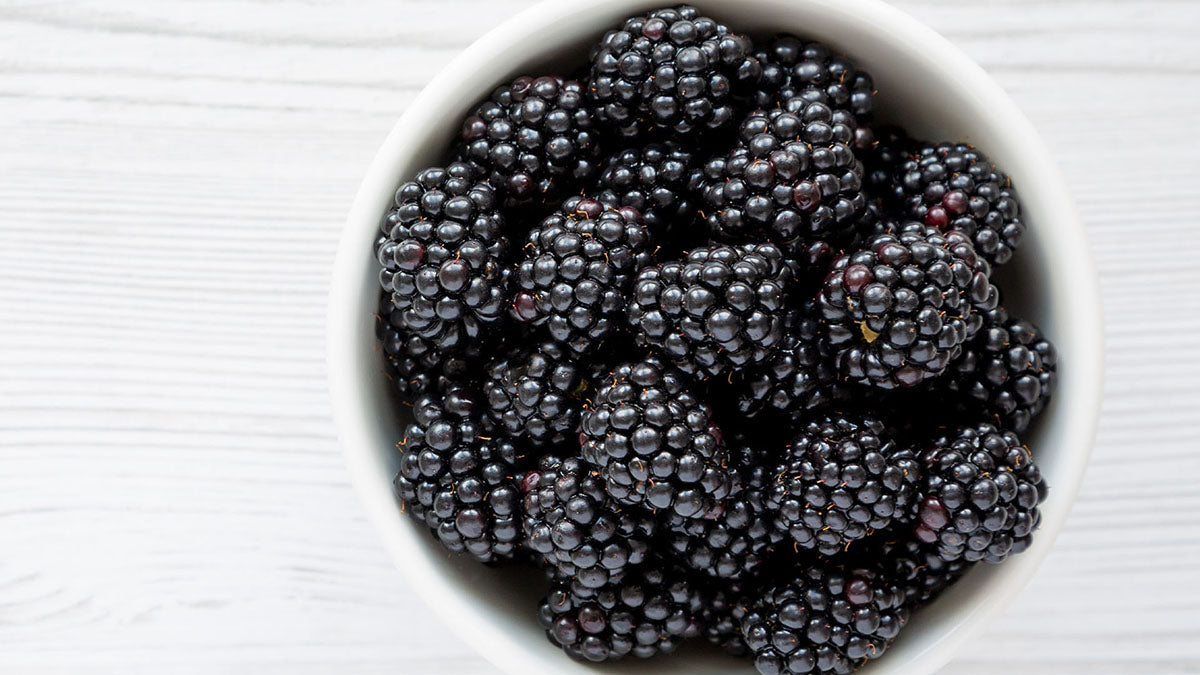


Juicy, dark blackberries are a favorite fruit for people, and they can also be a safe, nutritious treat for dogs when served plain and in moderation. In this article, we'll cover the nutritional benefits of blackberries, safe serving tips, and which blackberry products to avoid.
Can dogs have blackberries?
Yes, dogs can have plain blackberries without added sugar in moderation as an occasional treat.
Are blackberries good for dogs?
Blackberries can be a healthy, nutrient-rich food for dogs.
Nutritional benefits of blackberries for dogs
Blackberries are a light, nutrient-rich fruit providing fiber, essential vitamins, and naturally occurring compounds that can be a healthy addition to a dog’s treat rotation.
According to the U.S. Department of Agriculture, 100 grams of blackberries (roughly 3.5 ounces) provides about:
- 43 calories
- 5.3 grams of fiber
- 9.61 grams of carbohydrates
- 1.39 grams of protein
- 4.88 grams of total sugars
- 11 µg of vitamin A
- 1.17 mg of vitamin E
- 21 mg of vitamin C
- 19.8 µg of vitamin K
Blackberries are also a source of calcium, potassium, and magnesium.
Health benefits of blackberries for dogs
Blackberries can be a nutritious occasional treat for dogs. They are not a necessary part of a typical canine diet, but when served plain and in small portions, blackberries provide fiber, beneficial micronutrients, and naturally occurring plant compounds.
-
Low calorie
Blackberries are naturally low in calories, making them a smart, whole-food alternative to heavily processed, higher-calorie treats. -
Antioxidant support
Like other berries, blackberries contain anthocyanins, flavonols, and ellagitannins — plant compounds with antioxidant activity. These compounds help neutralize unstable molecules in the body that can cause cellular stress over time. Research in dogs suggests that antioxidants in the diet can support their overall health. Studies specifically on blackberries are still limited. -
Fiber
Blackberries are a good source of dietary fiber, which can help support healthy digestion and stool quality when fed in small amounts. -
Vitamins and minerals
Blackberries contribute vitamin C, vitamin K, manganese, and small amounts of folate and magnesium. These nutrients support immune function and normal metabolism, though dogs should still get the bulk of their nutrition from a complete and balanced dog food.
“Plain blackberries are a safe and nutritious treat for dogs when served in moderation, offering fiber, vitamins, and antioxidant compounds that support overall health.”
Dr. Lea Engelman, DVM
Can blackberries be bad for dogs?
Blackberries are safe for most dogs, but portion size matters. Because blackberries contain natural sugars and a fair amount of fiber, eating too many at once may cause mild digestive upset, including gas, vomiting, or loose stools.
How to safely feed your dog blackberries
If you want to share blackberries with your dog, the safest approach is to keep them plain and simple. Fresh or unsweetened frozen blackberries are the best options.
Fresh blackberries
Store-bought fresh blackberries are the best choice for most dogs. Blackberries from a farmers market or a home garden are also fine, as long as they have not been treated with pesticides or herbicides.
Frozen blackberries
Store-bought frozen blackberries can also be a safe choice, as long as they are plain and do not contain added sugar, syrups, or flavorings. They can be especially appealing in warm weather and may work well as a cooling snack or enrichment treat.
Wild blackberries
Dogs can eat wild blackberries, but extra caution is important. Only offer wild blackberries if you are certain you have the right plant. Even when the berries themselves are safe, fruit growing near roadsides, sprayed fields, or contaminated areas may carry substances you don't want your dog eating. When in doubt, store-bought blackberries are the better choice.
How to prepare blackberries for your dog
Always serve blackberries plain. Avoid adding yogurt, syrups, honey, or other sweeteners that pile on fat and sugar.
- Wash the berries thoroughly. Rinse blackberries under cool running water to remove dirt and pesticide residue.
- Remove leaves and stems. Dogs should not eat blackberry leaves and stems because they can be fibrous, difficult to digest, and may pose a choking risk.
- Discard any spoiled or moldy berries. Mold can make dogs sick, so check each berry and throw out any that look soft, moldy, or overripe.
- Adjust the size if needed. Most medium and large dogs can eat blackberries whole, but halving or lightly mashing them is safer for very small dogs and puppies. Frozen berries should be softened slightly before serving to small dogs.
Once the blackberries are prepared, you can offer them in a few simple ways.
- Serve them as a simple treat. Offer a few blackberries on their own, or lightly mash them over your dog’s regular food.
- Stuff a food-safe toy. Mashed blackberries can be added to a KONG or another food-safe toy and chilled or frozen before serving.
- Try a lick mat. Spread a thin layer of mashed blackberries on a lick mat to keep your dog busy a bit longer.
Which blackberries should dogs not eat?
Dogs should not eat processed blackberry products. Many contain added sugar, fat, dairy, or other ingredients that can upset a dog's stomach or cause more serious harm. These include:
- Blackberry jam, preserves, and spreads, which usually contain a high amount of sugar that can upset a dog's stomach. Some sugar-free versions may also contain xylitol, which is toxic to dogs.
- Blackberry yogurt, which often contains added sugar and dairy that may upset a dog’s stomach.
- Blackberry ice cream, which typically includes sugar and milk that can cause digestive upset in dogs.
- Canned blackberries, which are commonly packed in syrup or other sweetened liquids that can upset a dog’s stomach and add unnecessary sugar to their diet.
- Blackberry juice, which lacks the fiber of whole blackberries and is typically high in sugar, making it a poor choice for dogs.
- Baked goods such as blackberry cakes, pies, tarts, muffins, and turnovers, which often contain ingredients dogs should avoid, including sugar, butter, and chocolate.
A note on dried blackberries
Dehydrated and freeze-dried blackberries are not the best option for dogs. Because the water has been removed, the fruit becomes more concentrated, which means the natural sugars and fiber add up more quickly in a small serving. Some dried fruit products may also contain added sugar, preservatives, or other ingredients that are not ideal for dogs. If offered at all, dried blackberries should be plain, unsweetened, and given only in very small amounts.
How many blackberries can a dog eat?
Veterinary nutrition guidance recommends that treats and extras make up no more than about 10% of a dog’s daily calories. Blackberries fit well within this guideline because they are naturally low in calories while still providing fiber and antioxidants.
When introducing blackberries, start with a small amount and monitor for any signs of digestive upset.
Calorie guidance
One average blackberry contains only a few calories, but portion size still matters because fiber content can add up quickly.
Suggested portion sizes for fresh or frozen blackberries:
- Small dogs (under 20 lbs): 1 to 2 blackberries
- Medium dogs (20 to 50 lbs): 3 to 4 blackberries
- Large dogs (over 50 lbs): 5 to 6 blackberries
Feeding frequency
Blackberries should be offered as an occasional treat rather than a daily food. In most cases, a small portion, 2–3 times per week, is plenty for a healthy dog, while keeping total treats within about 10% of daily calorie intake.
Recommended Reading

Can Dogs Eat Blueberries? Health benefits, risks, and feeding tips
If you’ve ever wondered whether dogs can eat blueberries, the answer is yes — and they may even benefit from them. These...

Can Dogs Eat Cranberries? Health benefits and potential pitfalls
Cranberries are everywhere these days: mixed into salads, baked into breads, and adding a bright touch to seasonal meals. While cranberries are...

Can Dogs Eat Raspberries? What to know before sharing this sweet treat
Tart, red raspberries are a popular treat for people – and they can also be a tasty and healthy snack for dogs...

Can Dogs Eat Strawberries? Nutrition facts and common concerns
Loved for their bright red color and sweet flavor, strawberries show up in everything from smoothies and salads to baked treats. On...


Which dogs should not eat blackberries?
Like people, dogs are individuals, each with their own health needs and sensitivities. Blackberries are typically safe for dogs, but some dogs should eat them only in very small amounts, or avoid them entirely. When in doubt, check with your veterinarian.
Puppies
Because puppies have more sensitive digestive systems, new foods should always be introduced gradually and in very small quantities while monitoring for digestive upset.
Senior dogs and dogs with special health conditions
Senior dogs may benefit from antioxidant-rich foods, but they are also more likely to have underlying conditions such as diabetes, kidney disease, dental issues, or digestive sensitivity. If your dog has a medical condition or eats a prescription diet, check with your veterinarian before adding fruit to the diet.
Dogs with allergies or sensitivities to blackberries
Although uncommon, some dogs may develop digestive upset or other reactions to blackberries. If your dog shows signs such as vomiting, diarrhea, itching, or skin irritation after eating blackberries, stop offering them and contact your veterinarian.
Summary
For most dogs, blackberries are a safe and nutritious treat when served plain and in small amounts. They offer fiber, vitamins, and antioxidants while being naturally low in calories, which makes fresh or frozen blackberries a simple way to add variety to your dog’s treat routine.
As with any new food, introduce blackberries gradually and watch for any signs of digestive upset. Portion size matters too, especially for smaller dogs.
Author