

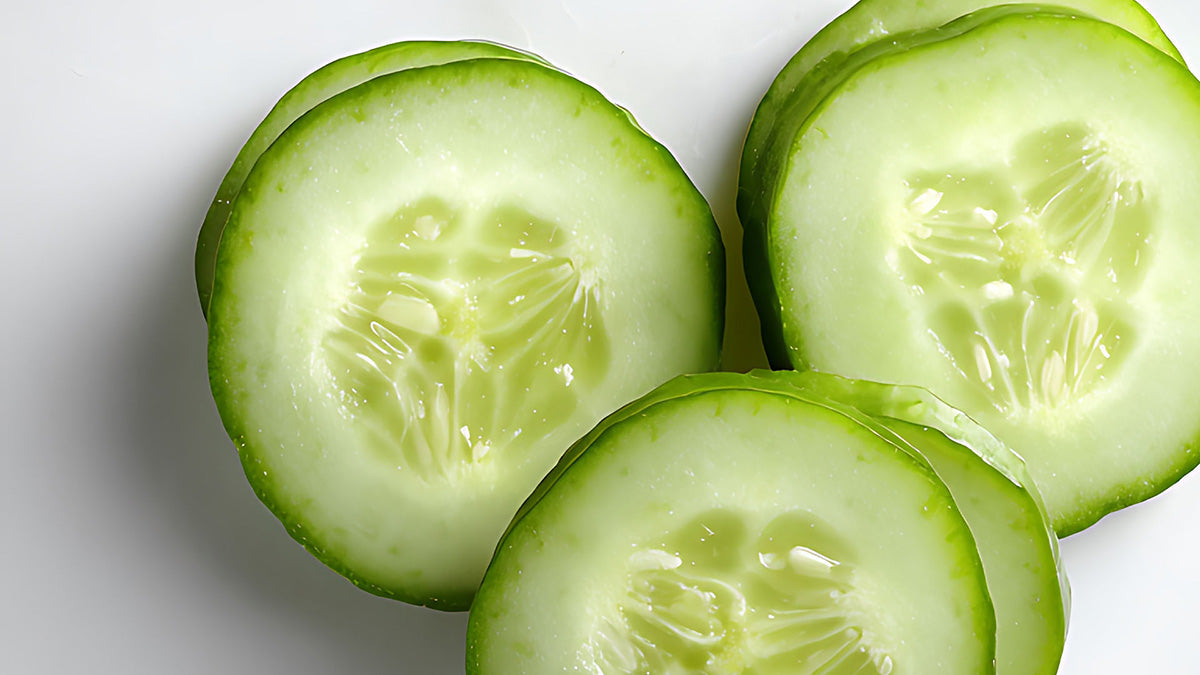


When you think about cucumbers, what comes to mind first: a fresh salad, a crisp pickle, or maybe a cooling eye mask during a spa day? What about a refreshing and tasty treat for your dog? Crunchy and hydrating, cucumbers can make a great snack for your canine friend, but there are some things to keep in mind first.
Can dogs have cucumbers?
Yes, dogs can eat cucumbers. Cucumbers contain vitamins, minerals, and are low in calories, making them a healthy, crunchy snack choice for our four-legged companions.
Can dogs eat all parts of a cucumber?
Dogs can safely eat the entire cucumber fruit, which consists of the outer rind or skin, the inner flesh, and the seeds.
- Cucumber rind or skin: Yes, dogs can eat the rind or skin of cucumbers. This is where most of the nutrients are, including Vitamin A and K, magnesium, and potassium.
- Cucumber flesh: Yes, dogs can have cucumber flesh. It holds most of the cucumber's water, making it an especially hydrating treat.
- Cucumber seeds: Yes, cucumber seeds are safe for dogs to consume. They contain vitamins and minerals. Of course, you may find seedless cucumbers at your local grocery store, and those are okay too.
Dogs should not eat the roots, stems, cotyledons, or leaves of a cucumber plant as they may cause stomach upset.
Can dogs eat English and American cucumbers?
The two most popular cucumber varieties that you may notice at your local store are American cucumbers, which tend to be shorter and wider, and English cucumbers, which tend to be longer, skinnier, and are often wrapped in plastic. American cucumbers have a thicker skin and more seeds, sometimes giving them a more bitter taste. English cucumbers have more delicate skin and little to no seeds, so their flavor can be sweeter. American and English cucumbers have similar nutrient profiles, and both are safe for your furry friend to eat.
Are cucumbers good for dogs?
Yes, cucumbers can be a healthy addition to most dogs' diets. Cucumbers contain small amounts of vitamins, minerals, and dietary fiber. Unlike many other treats, including other fruits or veggies, cucumbers are very low in calories and are made up of 95% water.
Nutritional profile of cucumbers
According to the United States Department of Agriculture (USDA), 100 grams (around 3.5 ounces) of raw cucumber, or about ⅓ of an average-sized cucumber, contains:
- 15 calories
- 95.2 grams of water
- 3.63 grams of carbohydrate
- 1.67 grams of total sugars
- 0.5 grams of dietary fiber
- 147 mg of potassium
- 13 mg of magnesium
Health benefits of cucumbers for dogs
Cucumbers have a modest nutrient profile. Their true value is that they consist mostly of water, making them a crunchy, hydrating snack on hot days. Their low carbohydrate and sugar levels also make them ideal for diabetic dogs or dogs on a weight-loss diet.
-
Weight management
If your veterinarian has told you that your dog needs to lose weight, cucumbers are a great snack to supplement their diet because they are mostly water and contain very few calories. If you do not want to have to stop giving your dog multiple treats per day, cucumbers are a good alternative. -
Hydration
With about 95% water content, cucumbers are one of the most hydrating vegetables. Fresh or frozen cucumber slices can help keep your dog hydrated and provide a cooling treat on hot days. -
Suitable for diabetic dogs
Cucumbers are very low in carbohydrates and sugar and will not cause significant glucose spikes. This makes them an ideal snack for diabetic dogs. Remember to always consult your veterinarian before making any changes to a diabetic dog’s diet. -
Metabolic health
Magnesium plays a role in many of a dog's metabolic processes, including temperature regulation and blood pressure management. Research published in Open Veterinary Journal indicates that magnesium stores can shift in response to environmental and physical stress. Cucumbers contain small amounts of magnesium, and while they are not a significant source on their own, they can contribute to overall intake as part of a varied diet.
“Cucumbers are a healthy, hydrating treat for your dog, especially if your veterinarian has recommended a diet for weight loss.”
Dr. Christina Meiners, DVM
How many cucumbers can dogs eat?
Cucumbers can be offered as a treat and are not meant to replace a complete and balanced diet that meets the Association of American Feed Control Officials’ (AAFCO) standards for your dog’s life stage. All treats, including fresh fruit and vegetables, should not make up more than 10% of your dog’s daily calorie intake.
Because cucumbers are very low in calories, even a generous serving will fit comfortably within the 10% guideline. The bigger concern is digestive upset from offering too much at once.
When introducing cucumbers to your dog, start with a small amount and monitor for any signs of digestive upset.
Suggested portion sizes for fresh and frozen cucumbers:
- Small dogs (under 20 pounds) such as toy breeds, Jack Russell Terriers, or dachshunds: Up to three slices per day
- Medium dogs (20–50 pounds) such as border collies, spaniels, or cattle dogs: Up to six slices per day
- Large dogs (over 50 pounds) such as Labradors, golden retrievers, or German Shepherds: Up to 10 slices per day
Recommended Reading

How to prepare cucumbers for your dog?
Only offer your dog raw cucumbers that are free of any seasonings or other additives.
Fresh cucumbers
- Wash the cucumber thoroughly to remove any dirt, pesticide residues, or waxy coating.
- Cut off both ends and discard them, as they may contain higher concentrations of cucurbitacin, a naturally bitter compound (see the note on cucurbitacin below).
- Cut into thin slices no thicker than ¼ inch. For small dogs, cut each slice into quarters.
- Serve plain. No seasonings, dressings, or toppings.
Frozen cucumbers
- Follow steps 1–3 above.
- Place the slices in a single layer on a baking sheet lined with parchment paper.
- Freeze for at least two hours, or until solid.
- Transfer to an airtight container or freezer bag and store for up to three months.
- Serve straight from the freezer as a refreshing warm-weather treat.
Feeding cucumbers to puppies and senior dogs
Cucumbers are safe for puppies and senior dogs. As with any treat, portion size matters — cut slices into smaller pieces than you would for an adult dog, as both puppies and seniors may be more prone to digestive sensitivity. Always supervise your dog when giving them cucumber, particularly if offering a larger piece, to avoid any risk of choking.
A note on cucurbitacin
Cucumbers belong to the cucurbit family, along with melons, pumpkins, and squash. The plant produces a bitter compound called cucurbitacin to defend itself against insects and other herbivores. Cucurbitacin is mainly found in the roots, stems, cotyledons, or leaves of a cucumber plant, but can also appear in small amounts in the fruit itself — usually concentrated near the ends and in the peel.
While cucurbitacin is generally not considered toxic to dogs in the small amounts found in cucumbers, it may cause stomach upset and should therefore be avoided. If you bite into a cucumber and it tastes unusually bitter, don’t feed that piece to your dog. Peel the cucumber and cut off both ends as a precaution.
Which dogs should not eat cucumbers?
While cucumbers are safe for most dogs, there are some situations where caution is warranted or cucumbers should be avoided altogether.
Dogs with allergies and sensitivities to cucumbers
Although rare, some dogs may be allergic or sensitive to cucumbers. Signs of an allergic reaction include itching, swelling around the mouth or face, vomiting, or diarrhea. If you notice any of these symptoms after feeding your dog cucumber, stop immediately and contact your veterinarian.
Dogs with special health conditions
If your dog has a pre-existing health condition — such as kidney disease, gastrointestinal issues, or any condition requiring a carefully managed diet — always consult your veterinarian or a board-certified veterinary nutritionist before introducing any new food, including cucumbers.
Cucumber dishes to avoid feeding your dog
Always offer cucumbers to your dog plain and unseasoned. Many popular cucumber-based dishes and snacks contain ingredients that range from harmful to outright toxic to dogs.
Ingredients commonly used to prepare cucumbers that are not safe for dogs include:
- Oils, dressings, and mayonnaise: high-fat ingredients can cause digestive upset, vomiting, and diarrhea, and may contribute to more serious issues like pancreatitis.
- Onions and garlic: both are toxic to dogs and can cause life-threatening hemolytic anemia (low red blood cell counts) if consumed in larger amounts.
- Vinegar: while not toxic, it can irritate the lining of the mouth, esophagus, and stomach, causing nausea, vomiting, and digestive discomfort.
Cucumber-based dishes and snacks to avoid sharing with your dog:
- Dill pickles or other pickled cucumbers: Dogs should not eat any pickled cucumbers, as they are usually brined in vinegar and often flavored with spices such as garlic, onions, salt, and peppercorns.
- Tzatziki: Tzatziki is toxic to dogs and should not be fed under any circumstances, as this traditional Greek yogurt dip contains large amounts of garlic.
- Gazpacho: This flavorful chilled Spanish soup should not be shared with your dog, as it typically contains onions and garlic (which are both toxic to dogs) and other ingredients like vinegar, salt, and pepper, which can upset a dog’s stomach.
- Cucumber salad: Avoid sharing cucumber salad with your dog. While there are countless ways to prepare it, typical ingredients like oil, mayonnaise, garlic, onions, salt, or pepper range from unhealthy to toxic to our four-legged friends.
- Cucumber chips: Dogs should not be given cucumber chips. While sold as a healthy alternative to potato chips for humans, they are usually seasoned with spices that can cause stomach upset in dogs.
- Cucumber water: Commercial cucumber-flavored waters should not be given to dogs as they may contain additives and artificial sweeteners. Always check the ingredient label, as some products may contain xylitol, which is highly toxic to dogs. Plain homemade cucumber water — made with only fresh cucumber slices and water — is safe for dogs.
Conclusion
Cucumbers can be safely fed to most dogs alongside their well-balanced diet. They are low-calorie and hydrating, which makes them an ideal choice for diabetic dogs and dogs on a diet. Remember to cut them up into appropriately sized pieces and always monitor your dog when giving them something that could become a choking hazard. If your dog has a special medical condition, always consult your veterinarian or a board-certified veterinary nutritionist before adding any new food or treats to their diet.
Author


